Wednesday, 14 January 2015

Two Sets of Twelve of "Five Words to Ruin A Date"

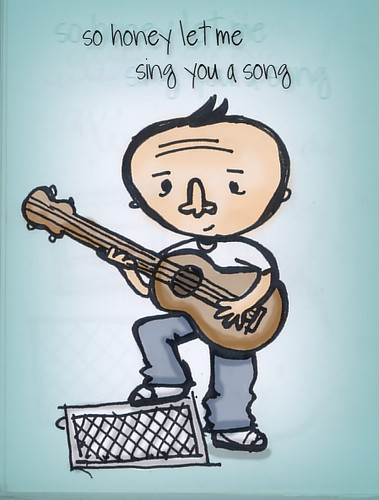
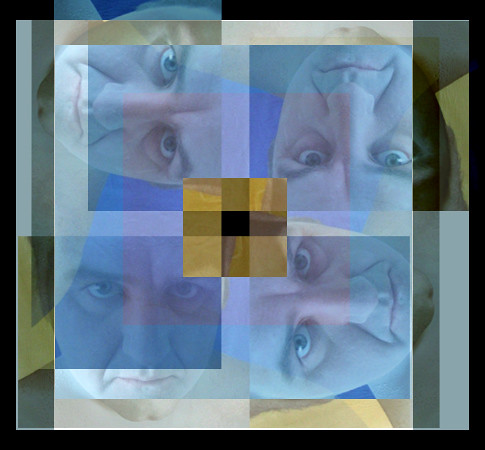
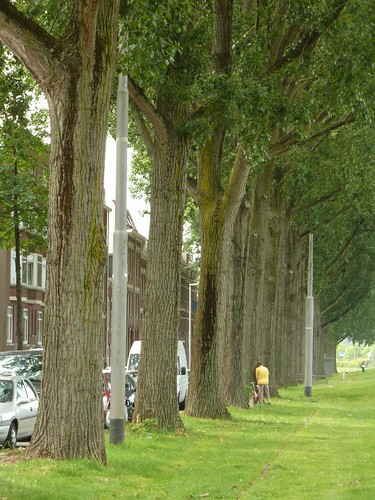
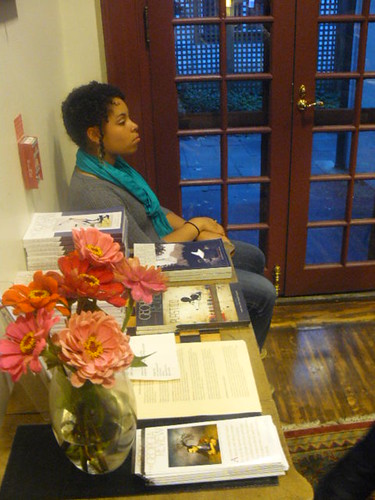
Random sentences generated here, rearranged by a human (that's me!) in a vain attempt to craft a little narrative from them, and fed through my random comics generator that pulls matching pictures from Flickr. (Interesting to get so many text-based images coming out - looks strange with the text on top of text)

This is certainly not the first robot-generated comic, but is it the first collaboration between two primordial content-spewing robots, as writer and artist?

Make of it what you can!

Version 1


He knows where we live.

Look at this, says he.

But it's so dim, now.

We were afraid to think.


He had not painted it.

It is far too fragile.

She seemed uncanny and fateful.

Drop in whenever you like.

No, not just at present.

They studiously avoided each other.

That's the secret of it.


And now they are gone.


Version 2


He knows where we live.

Look at this, says he.

But it's so dim, now.

We were afraid to think.


He had not painted it.

She seemed uncanny and fateful.

It is far too fragile.

Drop in whenever you like.

No, not just at present.

They studiously avoided each other.

That's the secret of it.


And now they are gone.


Tuesday, 13 January 2015

Surely, Shirley

These being the opening words for this section (and the next one, as luck would have it...)


Friday, 9 January 2015

Machine-made High Art

The big question for today: "Can Machines make Art?"

Why that question? There's an interesting interview/profile piece in the New Yorker about a young couple who've made a lot of money creating "viral" / "clickbait" web sites, and apply a lot of number-crunching to hone the headlines in order to drive traffic to their sites, and to keep it there (the revenue streams come from online ads, so the number-crunching's driven by the bottom line for the business). (It's slightly confused - the headlines refer to the guy, the company's named after him, but she's also involved, and 2/3 of the way down, it says she's as "smart" as he is. I came away seeing the business as a joint venture between the two of them, I may be wrong about that.)

The article's interesting as a story of how the internet helped someone make a sack of cash (and yeah, I'm turning out nonchalant phrases here to conceal the twinges of jealousy!), but also as an insight into the Silicon Valley style mindset that got him and his partner where they are today.

One of the owners, a Mr. Spartz, makes a rather bold declaration that came my way via the twittersphere, that vast borg-like internet-age intelligence, via fellow absorbee Damien Walter, who's since written quite a searing attack on Spartz, much of which I have to agree with. Anyway, Spartz says:

"Art is that which science has not yet explained"

Putting it into context a little, he's referring to a Katy Perry pop song, and how techniques similar to the ones that he uses to hone his headlines could be used to improve and match the lyrics, vocals, melody etc., and use the wisdom of the crowds to build a better pop song.

So, picking apart his assertion, I'd take away the following observations:
1. He's in danger of confusing art with entertainment
2. He's in danger of confusing statistics with science
3. There's an underlying presumption that "science" will inexorably explain everything

all of which rub me up the wrong way, push my buttons, etc. Having one's buttons pushed is usually an invitation to either indulge one's own prejudices and project one's shortcomings onto someone else, or, to take the road less travelled, ask your own prejudices what they're getting uppity about. The danger of the second approach, of course, is that you might learn something new! I'm feeling reckless - if I am unlucky enough to learn anything new, I can always forget it tomorrow - so here goes.

High and Low Art

I carry around in my baggage a distinction between low and high art, and think - sure, techniques like Spartz uses could be applied to low art/entertainment, but not to the high-minded stuff that I like. This gives me a warm fuzzy feeling of superiority, and an unshakeable belief that I'm safe from The Machine that's going to come lumbering our way.

But what, actually, is the difference? After all, I like a lot of Low Art (a.k.a. art without pretensions at grandeur) too. My two young daughters have got me hooked on Disney's "Frozen", to the point where I'll speak well of it in adult conversation, for example!

The clearest distinction that I can make, which isn't quite the same thing as High vs. Low, is art that comforts versus art that challenges. Terry Gilliam sums it up quite nicely - when telling a story, we can either apply closure, and wrap up all the ends to a story neatly (in terms of plot, emotional trajectories of the characters, the audience, etc.) or we can choose to leave the audience hanging, unsure of what has just transpired (he quotes Kubrick's 2001 as a prime example of the latter). Questions are more interesting than answers, as Pablo Picasso allegedly said, so leaving the audience with a question, requiring them to think, and form their own opinions, is surely a mark of respect.

Re-consulting my baggage at this point, it tells me to shut up and stop worrying - that Spartz's techniques would be able to work on closure-driven feel-good material, but would fall apart on the challenging stuff. Ah baggage, you're leaking information there, always brusque and unpleasant when you're feeling threatened!

Sure, statistical methods can be successfully applied to feel-good stories. That's not new, they already are, a great deal, I expect. George Lucas probably took a big step in this direction with Star Wars, by applying Joseph Campbell's Hero's Journey so rigorously, to create a story and characters that the reader would recognise already. His approach has been honed over the years to the point where the skeleton of the formula often protrudes uncomfortably close to the surface, as another action hero overcomes self-doubt to win the heart of the woman he loves and defeat the CGI baddies. These cook-by-numbers tales track the zeitgeist remarkably well - to wit the increasing feistiness of Disney princesses and kick-ass-ness of their YA female counterparts, and the increase in sensitivity and reflectiveness (moodiness if you want to keep it macho) in the male counterparts. I applaud "Frozen" for turning Prince Charming into a Love Rat and replacing the formulaically climactic wedding scene with the recognition that other kinds of love have their power too, but it's an evolution, not a revolution.

We already describe this kind of storytelling as "formulaic", but technically, there's a difference between that and what Spartz is doing. Applying a known formula that's known in advance, requires a belief that this is what the audience will like/will sell tickets/whatever. Spartz' algorithm is blind - he uses hunches to come up with a range of starting headlines (and admits to having some skill here), then lets the users' decide, involuntarily, which variant "wins". As with any pseudo-Darwinian approach, the key is understanding how "fitness" is defined. Spartz is playing a lowest-common-denominator game, with casual browsing content, so the definition's relatively easy: number of eyeballs wins. With a high-profile movie? The studio will be looking at sales, obviously, but is there some scope for audience satisfaction or even aesthetics in there too? Hollywood's tried and tsted process of focus groups already does this to some extent,

I don't see that applying Spartz-style techniques to "improving" songs, novels or movies would be as major a breakthrough as the New Yorker article suggests.

So, what about High Art? The more interesting question, to me, is whether High Art is as immune to statistical improvement as I would like to think it is? (I'm assuming there is broad support for this premise amongst fellow proponents of High Art, the question of what I personally think isn't that important on it's own!) Is most High Art good, simply because it lacks closure or a single fixed meaning? I can think of a number of arthouse films that would have benefitted from tighter dialogue, better storytelling and/or clearer editing, without sacrificing their originality or individuality.

As a self-styled High Artist, I'm not altogether comfortable with these questions. I'd be quite happy with my art being a mystical communion with the universe, inviolable by statistics, thank you very much. I'd better keep reminding myself that discomfort is a good thing!

Wednesday, 7 January 2015

Fundamentalism

On the One Hand, Violence

Today, in Paris, a number of journalists, satirists and cartoonists were killed at the offices of the magazine "Charlie Hebdo", gunned down by a couple of hooded figures carrying Kalashnikov rifles and a grenade launcher, and apparently saying something about revenge and the "glory of Allah".

A couple of weeks ago, a deranged individual carrying a gun killed and wounded people at a cafe in Sydney, apparently with some extremist "muslim" agenda.

Over the last year or so, a terrorist organisation calling itself "The Islamic State" (and not using the more accurate epithet of "Daesh") has been occupying parts of Syria, committing atrocities such as beheading captives, enslaving women, and instituting a harsh martial law, supposedly in the name of Islam.

In all cases, innocent people have died, been injured and had their lives disrupted. My heart goes out to all of them, and those that survive them, for what it's worth. From what I see, that's a sentiment most of us share, and it's important.

On the Other Hand, Fear

Yesterday, and in the preceding week, there have been a number of articles in the press about intellectuals in France legitimising the views of the extreme right. Michel Houellebecq's novel "Soumission" describes an extremist muslim France in the near future, for example, and has generated some controversy.

In the UK, the far right UKIP political party have been gathering far more attention by the media than their share of the vote merits. Immigration is a hot potato in the forthcoming UK elections, with none of the major UK parties prepared to stand up and say that the economic downturn is NOT a result of immigration, but of irresponsible, unaccountable and reckless activity by the investment banking "industry".

And, well, Australia's far right majority under Tony Abbott just take the biscuit! Can't help but feel that they're just 5 years ahead of Europe.

Joining the Dots

Also, I can't help but feeling there is a connection here, between the violence and the fear. And not the simplistic narrative of mad, medieval arabs wanting to behead us, enslave our women and bomb us back into the dark ages, a false narrative that is lurking just below the surface of the Western psyche at present. Paris and Sydney have both been immaculately timed from a media perspective, as fuel for the growing fire of fear and hatred against Muslims. And the Daesh, the so-called "Islamic" State (here's a good article on why the names matter), seem to have a strong amount of "media savvy", releasing their beheading videos and the ones showing their idle soldiers bragging about their female slaves not because of a fervent belief in the words of the Quran, but because it will plant a strong connection in western minds between Islam and barbarism, goading western nations into ineffective military action that will erode any support for the West in the areas they are occupying. Well, we fell for that one in the UK, alright. 

The gunman in Sydney turned out to be a lone sociopath, who had latched onto some vague notion of islamic jihad to justify his tragic expression of anger and alienation. The killers in Paris haven't been identified yet, but I'd suspect they too are disconnected, off-their-trolley types who have hooked into the muslims-are-the-killers-du-jour meme that the Daesh, and the far right press, have been peddling. I've not seen any questioning in the press yet about who they are, and their muttered "glory of Allah" lines appear to have largely been taken at face value. There's a very good article by Jeff Sparrow here that gives an insight into the mindset of these people, in quite a different time and place. To paraphrase very quickly, the people who are likely to align with radical fundamentalist Islam these days as an excuse for a killing spree would, a century or so ago, have been spouting the dogma of the radical atheist anarchist bombers. And the world governments perceived them as an organised, unified threat then, too!

Has anyone else wondered if the killers at the Charlie Hebdo office might have been far right loonies of some stripe out to whip up racial fear, and take out a journalistic thorn in their side while they're at it? I feel like a conspiracy theory freak for even saying so, but then, a few years ago I'd have felt that way for voicing suspicions about any of the shady ties between the intelligence agencies, government, organised crime etc. that Edward Snowden's shown to be real. The world does sometimes work like something from a paranoid's nightmare. I have no insider knowledge here, just a hunch, that may betray my own wishy-washy liberal sentiments as much as any genuine insight into the situation. Make of it what you will, and FFS journalists, do your job properly and question the identity of the Charlie Hebdo gunmen a little, will you?

Religion

I've seen a lot of sentiment on/via twitter today about the connection between these atrocities and the narrow-mindedness and outdatedness of religion. Read Jeff Sparrow's article and get back to me on this one, please? Unstable people don't like religion so much as they like fundamentalism. I respect and understand the strong atheist position as part of the ongoing debate about who we are as humans, but I find the hijacking of these tragedies by that argument to be somewhat distasteful. Yes, organised religion can be very backwards, and has contributed to a lot of suffering, but so have other dogmas about what it is to be human, such as Marxism, Anarchism and Global Capitalism. (I think Salman Rushdie's statement on PEN described religion as mediaeval. The thought struck me that our rational, secular economics, and widening income gap, resembles feudalism, also a mediaeval way of doing things.) 

We need to be wary of a backlash against religion, and against race, at a time like this. Sydney's #illridewithyou hashtag was a great example of common sense rising above bigotry.

I'm wondering if the border guards depicted in this cartoon will feel justified by what happened in Paris today. I hope not. Will the cartoonists and satirists in the middle eastern and other muslim countries, who operate under considerable risk, feel sidelined by the press's current focus on the events in Paris? Again, I hope not.

I hope reading this (and more importantly, following the links) will help you to see the bigger picture around this sea of hatred, fear and hope that we seem to be swimming in. Writing it has helped steady me a little.

DISCLAIMER: I'm not religious, nor an atheist - if anything, I'm a fundamentalist agnostic - I do not wish to live with any certainty about what we humans are, because to do so seems complacent to me. I'm also a Quaker, which isn't an organised religion in the sense that it has no creed, and does not require me to believe or disbelieve anything, and I dislike the group-think aspect of many organised religions, and of many modern atheists. All of this, I think, is pretty much irrelevant to what I've written above.

Sunday, 4 January 2015

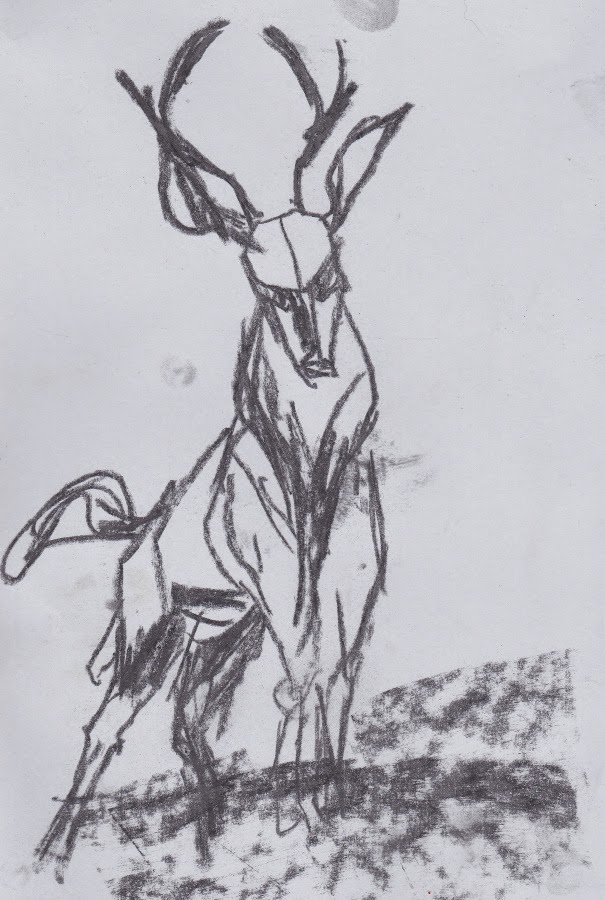
Trying Something New

A few sketches here trying ut a new christmas present of some derwent XL graphite blocks - solid little bricks of crumbly, dusty graphite with a int of pigment thrown in, about 1.5 x 1.5 x 4cm. Impossible to use without getting your hands filthy - yes that paper started out white! - but very easy to wash off!

The sketches are taken from an old present - the Dover reprint of Ken Hultgren's "How to draw animals", originally published in 1951. Fabulous easy-to-read account of animal anatomy and posture (and how to use it to convey emotion) from one of Disney's storyboarders/artists of the 1940's (worked on Bambi).

I did these purely for fun, less than a few minutes each, a great warm up exercise, and good to be trying something well outside my usual style and materials.


Friday, 2 January 2015

Myths, Dreams and When The Robots Take Over

Myths and Fairy Tales (or Wonder Tales, as the Germans know them) occupy a powerful place in a culture's psyche, and can offer a deep and direct view into it's heart.

Grimm's tales describe a timeless, archetypal view of the human condition, but also a powerful vision of life in Europe during the "Dark Ages" (hunger, famine, poverty and feudalism) and further back into our primitive past (wolves, forests).

Modern "urban myths" offer archetypal insights into the alienation and loneliness of our modern world - the animal side of ourselves that we repress as crocodiles and budgies breeding in the sewers, our self-hatred and vulnerablity in a social vacuum in many variants of the serial killer myths.

Ancient myths and modern ones can sometimes combine in unaccountably gruesome and beautiful ways under the extreme pressures that the disaffected people of the world live under. (If you're going to follow that link above, give yourself time, and space, to absorb it. I've read few accounts of such hope and hopelessness, it makes me weep. One day, I'd like to do something with it, but that's for another day.)

There's a myth doing the rounds at the moment, with the support of such luminaries as Elon Musk, Stephen Hawking and several up and coming movies (with various degrees of intelligence, I might add!) The story that we're busy telling ourselves around the digital campfire is that artificial intelligence is going to develop unpredictably quickly, bootstrapping itself to the point where it overshoots our own faculties faster than we can react.

On a pessimistic note, I can't say that I find our collective reaction time to existential threats to be very fast. If global warming's anything to go by, I'd advise AI to take it's own sweet time at overshooting us. We'll still be tripping over influential "skeptics" as they hop in and out of bed with vested interests, while politicians cook up hamstrung, half-baked non-solutions long after the point of no return. But I digress.

I'm interested in why these stories have so much traction right now. I doubt it has very much to do with us being near a tipping point in the emergence of AI. I suspect that we're using fiction to talk about the present, as I wrote about in last week's blog. The robots are a metaphor, but for what?

Humanity being subjugated by large, rapidly expanding non-human entities that can collectively out-think, out-manoeuvre us, and couldn't give a toss whether we live or die. Why does that strike a chord with us, here and now?

Look around. I could throw in a few suggestive words at this point, like multi-national corporation, government, banking crisis, and post-Snowdon era. But that's just my take on the story. What's yours?